Supreme Court Narrows ISP Liability in Cox v. Sony Music
Takeaway: The Supreme Court ruled that ISPs are only liable for users’ copyright infringement if they intentionally promote or design for it, not simply for failing to stop it.
The Supreme Court unanimously held in Cox Communications, Inc. v. Sony Music Entertainment that an ISP is contributorily liable for copyright infringement only if it intended for its service to be used for infringement, either by inducing it or designing the service for that purpose. The Court rejected liability based solely on knowledge of infringement or failure to terminate repeat infringers, vacated the lower court’s ruling, and remanded the case.
The dispute arose after Cox was sued for failing to disconnect subscribers accused of repeated infringement, leading to a $1 billion jury verdict. Writing for the Court, Justice Thomas emphasized that affirmative intent, not mere inaction, is required for liability.
In concurrence, Justices Sotomayor and Jackson agreed with the outcome but argued the majority unnecessarily narrows secondary liability. They maintained that the “material contribution” test and other theories, like aiding and abetting, should remain available, though the evidence here was insufficient to establish liability under those standards.
Australian High Court Upholds Clothing Designer’s KATIE PERRY Trademark in Dispute with Pop Star
Takeaway: Trademark rights depend on reputation in specific product categories, and long term coexistence without confusion can defeat cancellation claims
The High Court of Australia ruled in a split decision to uphold Australian designer Katie Taylor’s trademark registration for KATIE PERRY in clothing, rejecting efforts by pop singer Katy Perry to cancel it. The Court found that although the singer had an established reputation in entertainment by 2008, she did not have a reputation in clothing at that time, which was necessary to prove likely consumer confusion under trademark law.
The Court also rejected arguments that the singer’s later global fame justified cancellation, noting that more than a decade of overlapping use without evidence of confusion suggested consumers were not misled. The decision emphasizes that trademark reputation must be tied to specific goods or services and that real world evidence of confusion is critical. The case will return to a lower court to address remaining issues, including delays in enforcement.
USPTO Expands Design Patent Protection to Virtual and Holographic Images
Takeaway: The USPTO’s new guidance significantly expands potential patent protection for virtual and digital designs while raising questions about its legal limits.

The U.S. Patent and Trademark Office issued new guidance on March 12 that broadens design patent eligibility to include computer generated images displayed through projections, holograms, and virtual or augmented reality. The guidance explicitly recognizes these types of digital designs as potentially patentable and removes the previous requirement that applications must show a physical display screen to qualify as an article of manufacture. This represents a clear shift from the agency’s 2023 guidance, which kept stricter limitations and did not address these technologies.
Attorneys say the update provides greater clarity and flexibility, particularly for software companies that do not control the hardware their designs appear on. While some practitioners may still include display screens in drawings for strategic or international filing reasons, the changes are expected to increase both the volume and scope of design patent filings.
The guidance is not legally binding and has drawn criticism from some legal scholars who argue that the USPTO is stretching the statutory definition of an article of manufacture. Even with the expanded scope, all traditional patent requirements such as novelty and non obviousness still apply.
Supreme Court Leaves Ban on Copyrights for Fully AI Generated Art Intact
Takeaway: Fully AI generated works without human involvement remain ineligible for U.S. copyright protection.
The U.S. Supreme Court declined to hear a case challenging whether artificial intelligence generated artwork can be copyrighted, effectively upholding prior rulings that require human authorship. The dispute involved Stephen Thaler, who sought copyright protection for an image created entirely by his AI system DABUS. The U.S. Copyright Office rejected the application, and lower courts agreed, emphasizing that human creation is a fundamental requirement of copyright law.
The decision leaves existing policy unchanged, even as debates continue over how AI assisted and AI generated works should be treated. While some artists have sought protection for works created with tools like Midjourney, Thaler’s case focused on art produced without any human involvement, making it a key test of the limits of current law.
Epic Games Sues Former Contractor Over Alleged Fortnite Leaks
Takeaway: Companies are increasingly taking legal action to protect confidential digital content trade secrets, especially when leaks threaten partnerships and revenue tied to strategic announcements.

Epic Games Inc. filed a lawsuit against former contractor Hayden Cohen, accusing him of leaking confidential information about upcoming Fortnite content and partnerships on social media using anonymous accounts. The company alleges Cohen violated his nondisclosure agreement and federal trade secret laws by sharing unreleased details about collaborations, including with South Park and Solo Leveling, gaining significant online attention.
Epic Games claims the leaks harmed its business by reducing player excitement and damaging relationships with partners, which rely on carefully timed announcements. The company is seeking a court order to stop further disclosures and require Cohen to return or destroy any confidential materials.
Musicians Sue Google Over AI Music Tool Allegedly Built on Unlicensed Songs
Takeaway: AI companies continue to face significant legal risk if they use copyrighted works without permission to build tools that could compete directly with the creators of those works.

A group of independent musicians filed a class action lawsuit against Google LLC, alleging it copied millions of copyrighted songs, lyrics, and vocal recordings from platforms like YouTube to train its AI music generator Lyria 3 without permission. The plaintiffs claim the system can produce realistic vocals, lyrics, and harmonies by extracting elements such as “biometric voiceprints,” raising concerns not only about copyright infringement but also violations of publicity and biometric privacy laws.
The lawsuit argues that Lyria 3 directly competes with human musicians by generating music suitable for commercial uses like ads, games, and streaming content, threatening artists’ core revenue streams. It also alleges violations of the DMCA, claiming Google removed copyright management information and bypassed protections to obtain training data at scale. The plaintiffs seek damages as well as orders to stop further use of the data and require deletion of infringing training materials.
Copyright Challenges at the Winter Olympics Highlight Music Licensing Risks for Figure Skaters
Takeaway: Figure skaters and other performers must obtain proper copyright clearances for music in their routines, as failure to do so can disrupt performances and expose multiple parties to legal liability.
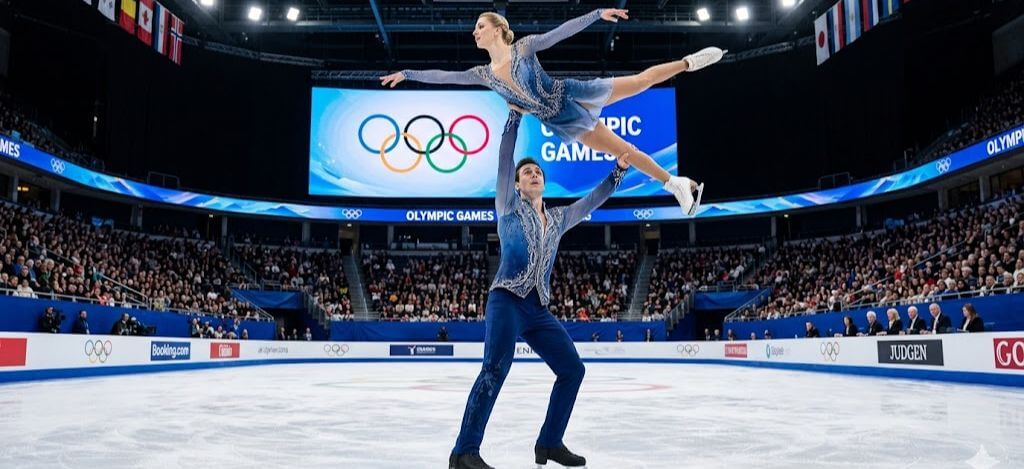
Several figure skaters at the 2026 Winter Olympics, including Tomas-Llorenc Guarino Sabate, faced copyright clearance issues when attempting to use popular songs in their routines. Sabate’s planned “Minions”-inspired routine was initially blocked due to lack of permission for the “Universal Fanfare” track, while other skaters, such as Marie Jade Lauriault and Romain Le Gac, had to switch songs when clearance for their first choices was denied. The cases illustrate that even prior use of a song does not guarantee future permissions, and that licensing requirements depend on event scale, broadcast reach, and territorial coverage. Platforms like ClicknClear can help secure music rights, but final approval rests with rights holders.
The article also notes that AI-generated music does not necessarily automatically bypass licensing obligations, as copyright applicability varies across jurisdictions. Competitors are advised to plan early, consider alternative or less popular music, and verify the scope of licenses to avoid last-minute disruptions and potential infringement claims.
Journalist Sues Grammarly Over Alleged Misappropriation of Expert Identities
Takeaway: Using AI to imitate or represent real people without permission can expose companies to legal claims for misappropriation, privacy violations, and unjust enrichment.

Julia Angwin filed a proposed class action lawsuit against Superhuman Platform Inc. in New York federal court, alleging its AI-powered “Expert Review” tool used the names, likenesses, and writings of well-known journalists and public figures without permission or compensation. The complaint claims that the tool, which provides writing feedback to paying users, misrepresents the advice of figures like Stephen King, Julie Brill, and Neil deGrasse Tyson, while using their publicly available work to train AI models.
Angwin asserts claims of unjust enrichment and violations of New York and California civil rights and publicity laws, seeking damages, an injunction to block further misappropriation, and protection for a nationwide class of individuals whose identities were allegedly used without consent. Superhuman has temporarily disabled the Expert Review feature following criticism from affected experts.
Cislo & Thomas LLP Spotlight
Cislo & Thomas LLP to Sponsor Santa Monica Bar Association Annual Judges Night
Cislo & Thomas LLP is proud to be sponsoring the Annual Santa Monica Bar Association Judges Night at the Annenberg Community Beach House. This event honors and thanks the judiciary servicing the Greater Los Angeles area for their continued dedication and contributions to both our community and the administration of justice.
Daniel M. Cislo, Esq. Meets with General Counsel of the USPTO and the Director of Patents and Trademarks at LAPLA’s Washington in the West Event
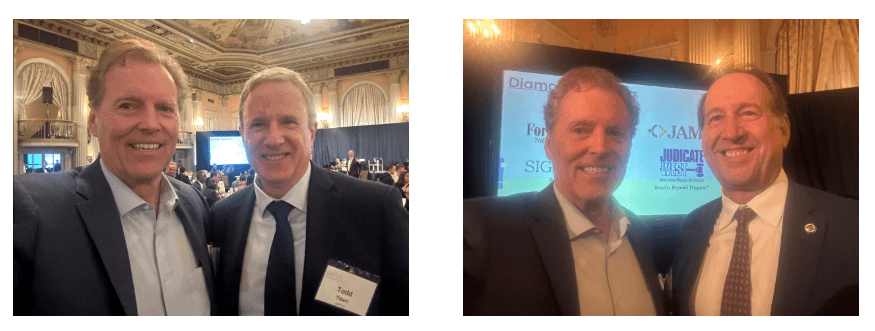
Our managing partner Daniel M. Cislo attended the Washington in the West annual event organized by the Los Angeles Intellectual Property Law Association, where he networked with the General Counsel of the USPTO Todd Tiberi (below left) and the USPTO Director of Patents and Trademarks John A Squires (below right). This event brings together intellectual property professionals, including lawyers and in?house counsel, for discussions, panels, and networking focused on key issues in patent and trademark law. The 2026 edition took place at the Millennium Biltmore Hotel in Los Angeles.