
2026 Intellectual Property Outlook: Five Trends Every Brand and Innovator Should Watch
Takeaway: Intellectual Property (IP) considerations will continue to be at the forefront of every business as we continue to advance in the digital and AI future.
As we move into 2026, intellectual property law continues to evolve alongside rapid technological change and global commerce. Courts, regulators, and brand owners alike are adapting to new realities, particularly those driven by artificial intelligence, digital marketplaces, and accelerated innovation cycles. The following five trends are expected to shape the IP landscape in 2026 and beyond.
1. Artificial Intelligence Will Continue to Test the Boundaries of Copyright Law
Artificial intelligence remains the most disruptive force in IP law. Courts are still grappling with whether copyrighted works used to train AI models constitute fair use, and whether AI-generated outputs are entitled to copyright protection at all. Recent decisions have emphasized that copyright protection requires human authorship, while leaving unresolved questions about derivative liability and training data exposure. Meanwhile, ongoing litigation against major AI developers signals that judicial clarity will come incrementally, not through a single sweeping ruling.
For businesses, the uncertainty surrounding AI-generated content presents both opportunity and risk. Companies deploying AI tools commercially must pay close attention to ownership of outputs, licensing terms, and the provenance of training data.
2. Trademark Enforcement Will Become More Urgent and More Complex
Trademark infringement is accelerating as AI tools and e-commerce platforms allow bad actors to launch copycat brands at unprecedented speed. Social media marketplaces, short-form advertising, and influencer commerce have made infringement harder to detect and faster to spread. At the same time, platforms continue to place the burden of enforcement largely on rights holders.
Courts and administrative bodies, including UDRP panels, are seeing increased activity involving impersonation and bad-faith domain registrations. In 2026, brand owners that delay enforcement risk dilution, consumer confusion, and weakened rights.
3. USPTO Examination Will Remain Rigorous as Filings Increase
Trademark filings continue to rise, while the U.S. Patent and Trademark Office maintains heightened scrutiny of applications, particularly regarding specimen use, identification of goods and services, and fraud prevention. The USPTO has made clear that accuracy and specificity at filing are priorities, and applicants should expect more office actions where applications are vague or overbroad.
As a result, poorly prepared filings are becoming more expensive over time, not less. In 2026, thoughtful trademark strategy at the outset will be essential to avoid delays, refusals, and costly re-filings.
4. Trade Secrets Will Play a Larger Strategic Role
With patent prosecution timelines remaining lengthy and public disclosure often undesirable, companies are increasingly relying on trade secret protection for valuable internal assets. This is especially true for algorithms, datasets, manufacturing processes, and proprietary business methods.
Courts continue to reinforce that trade secret protection depends not only on the value of the information, but on the steps taken to protect it. In 2026, internal controls, such as confidentiality agreements, access restrictions, and employee training, will be just as important as formal IP filings.
5. Global IP Strategy Will Become a Necessity, Not a Luxury
Digital businesses now face international infringement earlier in their growth cycle, often before they have consciously “expanded” abroad. Domain names, online marketplaces, and global advertising mean that brands can be copied worldwide almost instantly.
International trademark filings, customs enforcement, and coordinated takedown strategies will become increasingly important for companies seeking to maintain brand integrity. The cost of reacting to overseas infringement typically far exceeds the cost of early protection.
In 2026, intellectual property is no longer a passive legal safeguard. It is an active business tool. Companies that treat IP as a strategic asset, align it with growth objectives, and adapt to emerging risks will be best positioned to compete in an increasingly crowded and digital marketplace.
Ninth Circuit Clears Top Gun: Maverick of Copyright Claims Over Journalist’s Article
Takeaway: The Ninth Circuit affirmed Paramount’s win, ruling that any similarities between Top Gun Maverick and journalist Ehud Yonay’s 1983 article concern unprotected facts and abstract ideas rather than substantially similar, protectable expression, defeating the copyright and contract claims.

The Ninth Circuit unanimously affirmed summary judgment for Paramount, holding that Top Gun Maverick does not infringe the copyright in journalist Ehud Yonay’s 1983 nonfiction article “Top Guns” about the Navy’s real life flight school. The court found that any similarities between the film and the article exist only at a high level of abstraction, such as shared facts about the Top Gun academy or military aviation, which are not protected by copyright. After comparing protectable elements including plot, characters, dialogue, themes, structure, and mood, the panel concluded that none are substantially similar and that what is protected in the article does not appear in the film. The court also rejected the Yonay family’s contract and expert testimony arguments, concluding there was no triable issue of fact, and upheld the district court’s ruling that Paramount owed no credit under the terminated 1983 agreement.
USPTO Rejects “Las Vegas Athletics” Trademarks as Geographically Descriptive
Takeaway: The USPTO refused to register “Las Vegas Athletics” and “Vegas Athletics,” finding the marks primarily geographically descriptive and “Athletics” generic, while leaving the relocating MLB team the option to submit more evidence of acquired distinctiveness or seek weaker protection on the supplemental register.

The USPTO denied trademark registration for “Las Vegas Athletics” and “Vegas Athletics,” concluding that the proposed marks are primarily geographically descriptive and do not function as distinctive brand identifiers because they merely describe the team’s future location, while also finding that “Athletics” is a generic term for sports-related services. The agency rejected the team’s argument that the name has acquired distinctiveness through long-standing use, noting that prior registrations involved different city names and stylized logos and therefore do not create the same commercial impression. Although the refusals are not final, the team must respond within three months with additional evidence of distinctiveness or seek placement on the supplemental register, which offers more limited trademark protection, as it continues preparations for its planned relocation to Las Vegas in 2028.
U.S. Patent Filings and Grants Fall in 2025 Amid Shifting Corporate Strategies and Innovation Trends
Takeaway: U.S. patent filings and grants declined in 2025 for the first time in seven years, driven by factors including pandemic-related delays, shifting corporate strategies, and USPTO backlog, even as companies like Samsung, TSMC, and major automakers increased their patent output and innovation focus shifted toward energy and environmental technologies rather than AI..
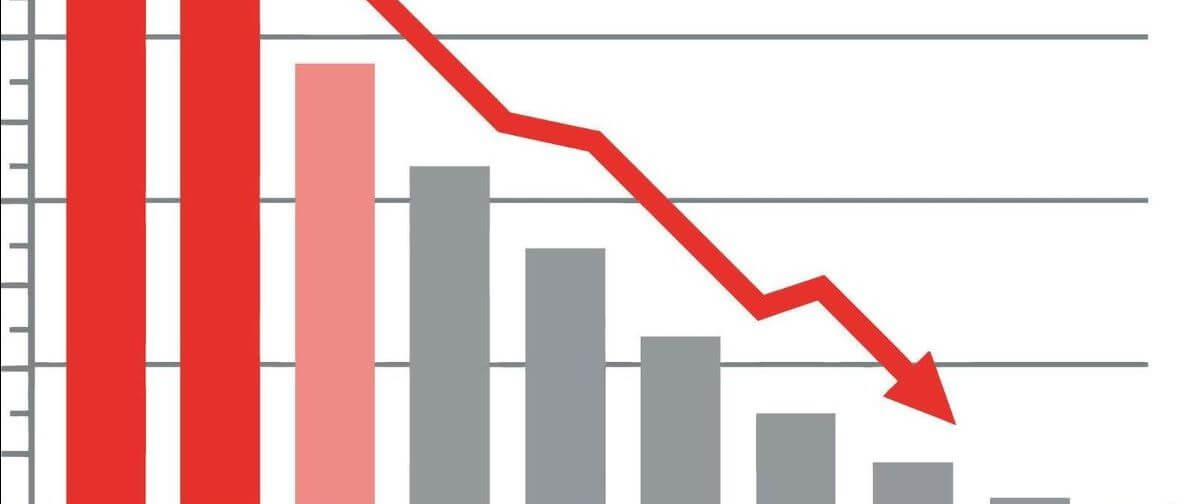
U.S. patent filings declined sharply in 2025, marking the first year-over-year drop since 2017 and ending a seven-year growth streak, according to a new IFI Claims Patent Services report. Published U.S. patent applications fell 9% to 393,344, the lowest level since 2019, while issued patents also slipped slightly to 323,272, a decline that may be linked in part to a record application backlog at the USPTO earlier in the year. IFI Claims suggested the downturn could reflect lingering pandemic effects due to the long lag between research, filing, and publication, as well as shifting corporate strategies that emphasize more selective patenting or reliance on trade secrets, particularly in fast-moving areas such as artificial intelligence.
Despite the overall decline, Samsung retained its position as the top recipient of U.S. patents, followed by Taiwan Semiconductor Manufacturing and Qualcomm, while companies such as Apple, Google, and Amazon saw decreases and automakers including Toyota, Honda, Kia, and Hyundai posted notable gains. The report also found that the fastest-growing patented technologies were not AI-related but instead focused on energy diversification and waste reduction, and that nearly half of U.S. patents were granted to foreign companies, with Japanese, Chinese, and South Korean firms accounting for a significant share.
This trend may also be the result of more and more innovations occuring in the AI and digital domain space which may be more suitable for trade secret protection than patent protection. These innovations can be kept in a “black box” online, which users can access without disclosure of the innovation. Contact us to help you develop your trade secret protection program.
Matthew McConaughey Trademarks Himself to Combat Unauthorized AI Likeness and Voice Use
Takeaway: Matthew McConaughey has secured U.S. trademarks on short videos, images, and his catchphrase to legally block or challenge unauthorized AI-generated uses of his likeness and voice, aiming to establish clear consent and attribution in the rapidly evolving AI landscape.
Matthew McConaughey is taking a novel legal approach to address the growing problem of AI-generated fakes by securing eight U.S. trademarks covering short video clips of himself, images, and his iconic catchphrase “Alright, alright, alright,” allowing him to block or pursue legal action against anyone using his likeness or voice without permission. His attorneys say the move is intended to create clear boundaries around consent and attribution in an AI-driven world, even though they are not aware of any current misuse.
While state right of publicity laws already protect performers from commercial exploitation of their image, McConaughey’s team believes federal trademark claims could provide broader deterrence, including for AI-generated content that is not explicitly sold. Experts note that U.S. law is still unclear on many commercial uses of AI-generated likenesses, and the actor and his lawyers hope federal legislation will eventually provide clearer guidance. The strategy is considered unusual, as few performers have secured trademarks on themselves in the AI era.
USPTO Launches Fast-Track Patent Pilot to Accelerate Review and Support Innovation
Takeaway: The Streamlined Claim Set Pilot Program offers a rare chance for companies to fast-track patent protection, giving them a competitive advantage in rapidly evolving markets.

The USPTO launched the Streamlined Claim Set Pilot Program on October 27, 2025, to address the long-standing patent application backlog by creating a fast lane for certain invention patents. Eligible applications must be original U.S. invention patents filed before October 27, 2025, with one independent claim and no more than ten total claims, following strict dependent claim rules. Requests must be submitted before the first examination opinion, using the PTO/SB/472 form via the USPTO Patent Center, and each inventor may participate in no more than four applications.
The pilot runs for twelve months with a quota of 200 applications per technology center on a first-come, first-served basis. Participation costs are relatively low, with fees of $150 for large entities, $60 for small entities, and $30 for micro entities.
While the program accelerates patent review, it carries risks because simplified claims may limit the scope of protection and competition for limited spots is high. The program is particularly suited for fast-iterating technology companies, export-oriented businesses seeking a U.S. market presence, and small or medium-sized enterprises that need efficient, cost-effective review. Companies are advised to prepare thoroughly, submit early, and strategically structure claims to maximize both speed and protection.
Federal Circuit Narrows Infringement Findings in School Bus Sign Patents
Takeaway: The ruling clarifies that design patents are strictly limited to what is shown in the drawings, and utility patents must account for actual product capabilities, potentially narrowing infringement claims.

Smartrend Manufacturing Group (SMG), Inc. sued Opti-Luxx Inc. for infringing two patents related to illuminated school bus signs, U.S. Design Patent D932,930 and U.S. Patent 11,348,491. A jury initially found infringement for both patents.
The Federal Circuit, however, partially overturned these findings. For the D932,930 design patent, the court held that the district court incorrectly interpreted “transparency” to include both transparent and translucent surfaces. Because the patent is claimed “as shown and described,” its protection is limited to fully transparent surfaces. The court vacated the infringement verdict and remanded the case for a new trial.
For the ‘491 utility patent, the court found that the patent’s claimed functions cannot be performed by a sign with an integrated frame, which Opti-Luxx’s product uses. SMG’s expert conceded that the accused product could not perform the functions, so the Federal Circuit reversed the infringement finding.
Cislo & Thomas LLP Spotlight
A New Year for Reflection Innovation and Intellectual Property
The start of a new year is an ideal moment to pause, reflect, and look ahead. For many businesses and creators, it is a time to revisit ideas that may have been put on hold, evaluate recent growth, and plan for what comes next. Innovation rarely stands still and neither should the protection of the ideas and brands that drive it.
At Cislo and Thomas LLP, we view the new year as an opportunity to help clients turn vision into lasting value, and a thoughtful IP strategy can play a critical role in supporting your business goals.
Our team is committed to partnering with you throughout the year ahead, anticipating challenges, protecting what you have built, and helping you capitalize on what is next. As you set priorities for the new year, we are here to assist with all of your intellectual property needs and to help position your ideas for long term success.
We look forward to working with you in the year ahead.